




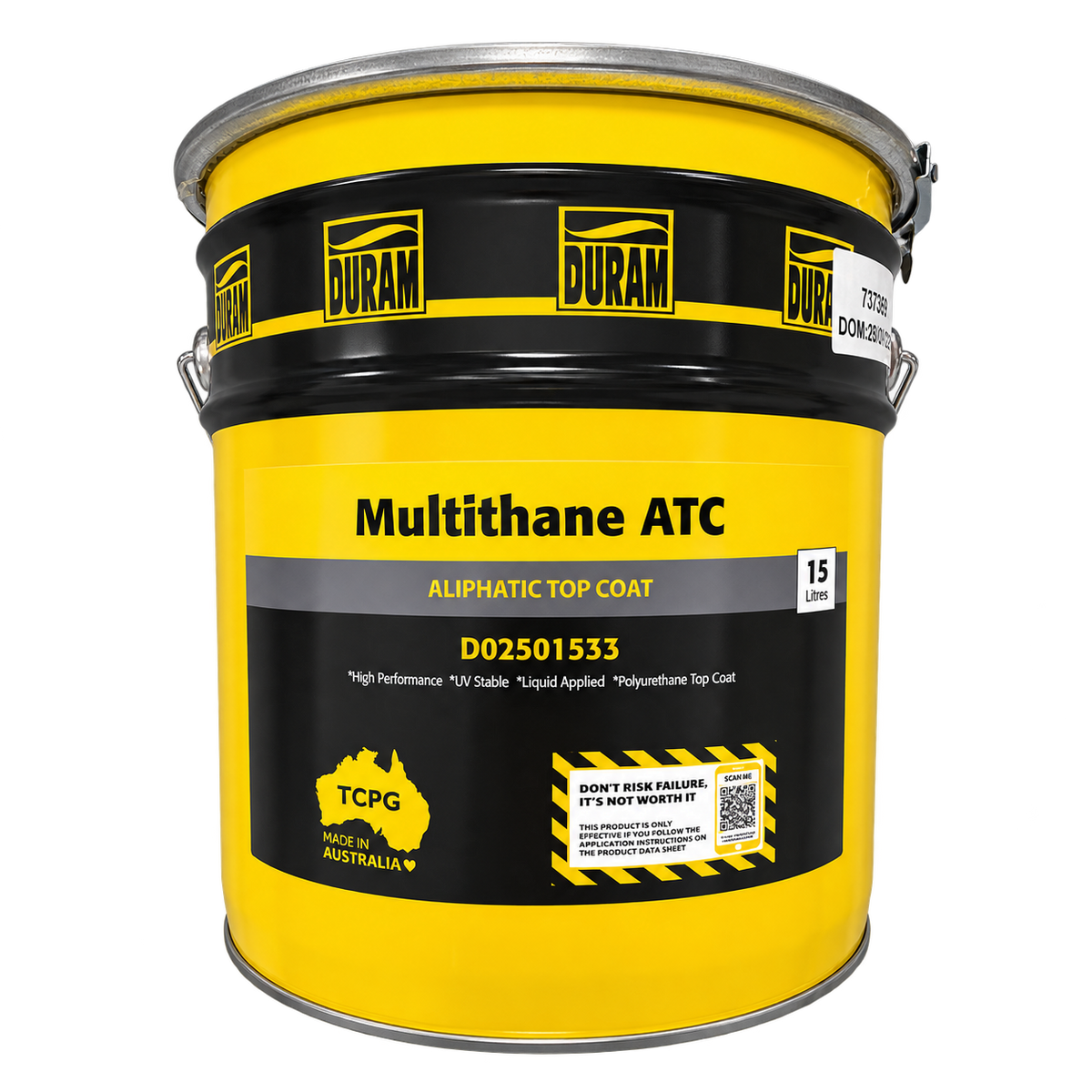
Duram is a polyurethane waterproofing and protective coatings brand supplied to the Australian trade. Our Duram listing is currently focused on Duram Multithane ATC, an aliphatic top coat used to finish and protect liquid applied membrane work on roofs, balconies, terraces and other exposed areas. If you are working to a specification that calls for another Duram line, talk to our team and we will check what we can supply.
Duram
1 product
Filters
View:
BEST PRICE GUARANTEEBest prices catalogue wide!
FAST DELIVERYAustralia wide
EXPERT ADVICETalk to our specialists
7 DAY RETURNS*Hassle-free returns
Compare Products
Saved Items
Calculate Shipping
Available shipping methods
Payment Options
Final approval, fees, and late-payment policies are set by each provider. See provider T&Cs at checkout.
DURAM
Duram FAQs
Common questions about the Duram range.
Still have questions?
Talk to our team for advice on the right Duram product for your job.
What is Duram Multithane ATC used for?
Duram Multithane ATC is a liquid applied aliphatic top coat designed to protect and finish waterproofing work that stays exposed. Typical uses include roofs, balconies, terraces and plant areas where the membrane underneath will see sunlight, weather and foot traffic. It is a protective and decorative finish coat rather than a stand alone waterproofing system, so it goes over a compatible base membrane.
Why does an exposed membrane need an aliphatic top coat?
Many polyurethane membranes waterproof extremely well but chalk, discolour or break down under prolonged UV exposure. An aliphatic top coat such as Duram Multithane ATC is applied over the membrane to carry that UV and weathering load and to give a harder wearing surface. On roofs, balconies and other exposed areas this is usually what keeps the finish looking and performing well over the long term.
Where can I buy Duram Multithane ATC in Australia?
Duram Multithane ATC can be ordered directly from this collection and shipped Australia wide. Because the Duram line we list is a top coat rather than a complete system, most buyers pair it with a compatible base membrane, primer and detailing products from our wider range, and our team can confirm that build up before you order. If you need another Duram product that is not shown here, send us the name off your specification and we will check availability.
How long does Duram waterproofing take to dry?
Drying and full cure depend on the specific product, how heavily it is applied, and the temperature, humidity and airflow on the day, so there is no single figure that applies across a range. Moisture cured polyurethanes in particular behave differently in dry inland conditions than in humid coastal ones. Always work to the recoat and foot traffic windows on the technical data sheet for the exact product you are using, and allow extra time in cold or still conditions.
Is 2 coats of waterproofing enough?
Coat counts are set by the membrane manufacturer for the substrate, exposure and system you are building, not by a general rule of thumb. Most liquid applied membranes are built up in more than one coat so that pinholes and thin spots in the first pass are covered by the next. Follow the coat schedule in the product documentation, and treat corners, junctions and penetrations as separate detailing steps rather than something the field coats will fix.
What are the disadvantages of liquid membrane waterproofing?
Liquid applied membranes depend entirely on the applicator getting the surface preparation, film build and coat schedule right, so results vary more than with sheet systems. They are also more sensitive to weather during application, and damp or contaminated substrates can cause adhesion problems or blistering. The trade off is that they cure seamless, detail easily around penetrations and awkward shapes, and go down quickly over large areas.
What are common waterproofing mistakes?
The most frequent problems are poor surface preparation, skipping the primer or using one that is not compatible with the membrane, and building the membrane thinner than the system calls for. Detailing is the other big one: internal corners, penetrations, drains and wall to floor junctions need bond breakers and reinforcing where the system requires them, not just an extra brush of membrane. In Australia wet area, external above ground and roof waterproofing are covered by standards such as AS 3740, AS 4654 and AS 4858, so check the current requirements and the product documentation before you start.