




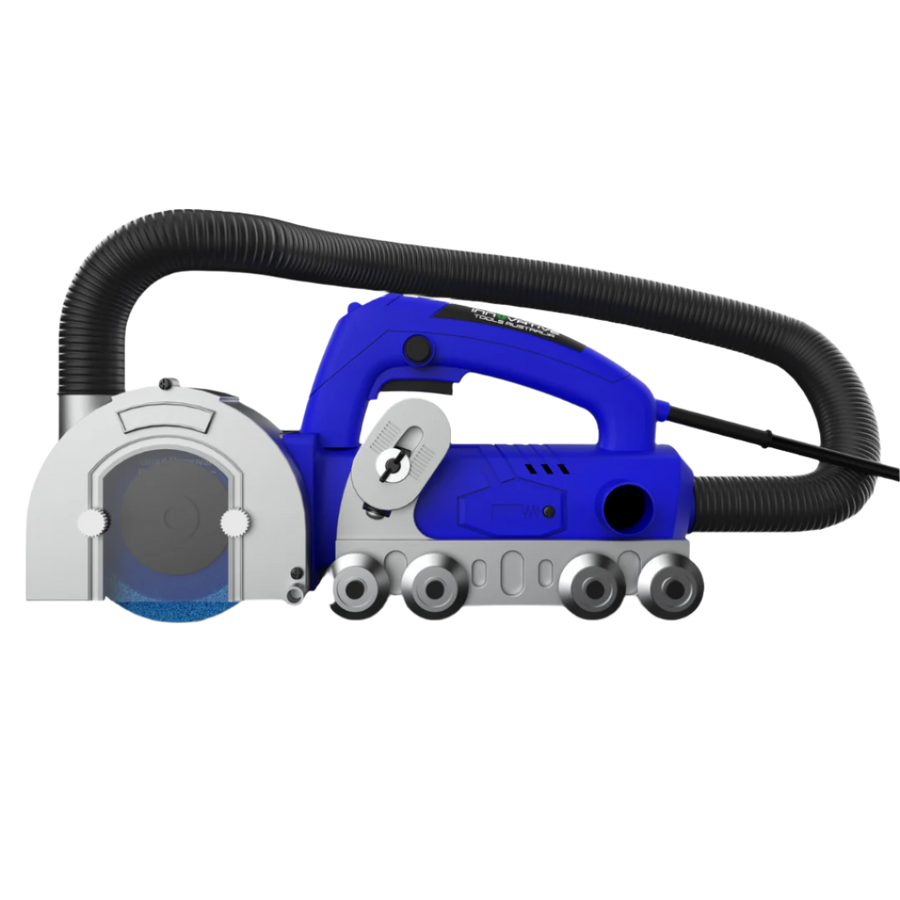
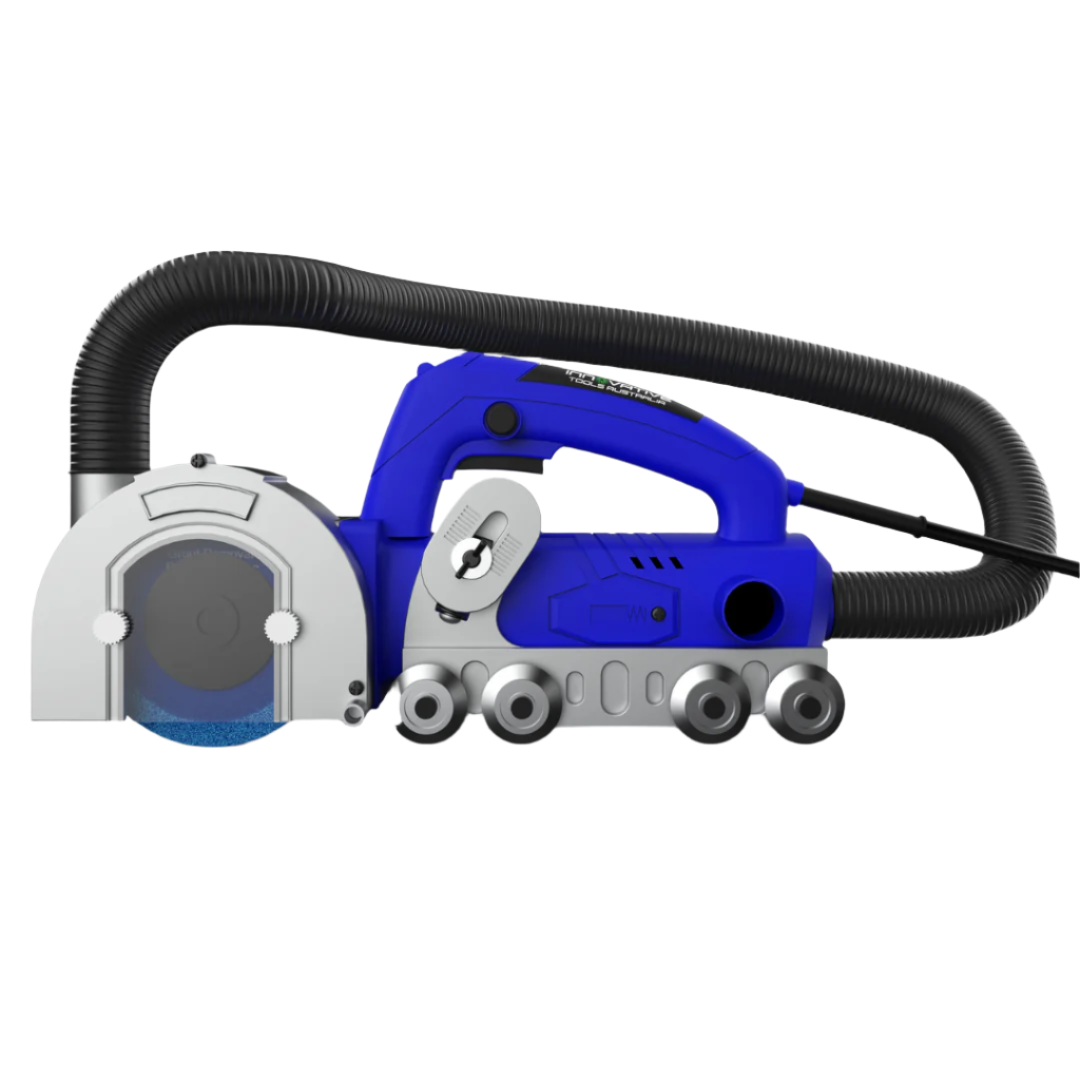
Grout Buster 3000 Grout Removal Machine
Remove tile grout fast without breaking the tile. Electric oscillation at 3000 rpm.
The Grout Buster 3000 is a handheld electric oscillating tool designed for removing tile grout from joints. The head oscillates side-to-side at 3000 rpm, carving out old grout without bouncing or chipping the tile.
What it's for
- Removing old grout from tile joints before re-grouting or tile replacement
- Wall and floor tiles up to 12mm joint width
- Ceramic, porcelain and natural stone tile surfaces
Why waterproofers buy it
- Oscillating head removes grout without damaging tile edges
- Faster than hand tools. Cuts labour time by half
- 3000 rpm rated. Consistent speed under load
- Lightweight and balanced for extended use
- Works with standard grout removal blades
Not for
Cracked or weakened tile, epoxy grout (very hard grout), or joints narrower than 3mm.
or 4 interest-free payments of $126.00 with  · ex GST $458.18
Call (02) 8021 3517 before you order
Product Details
Technical Specifications
What's Included?
Product Files

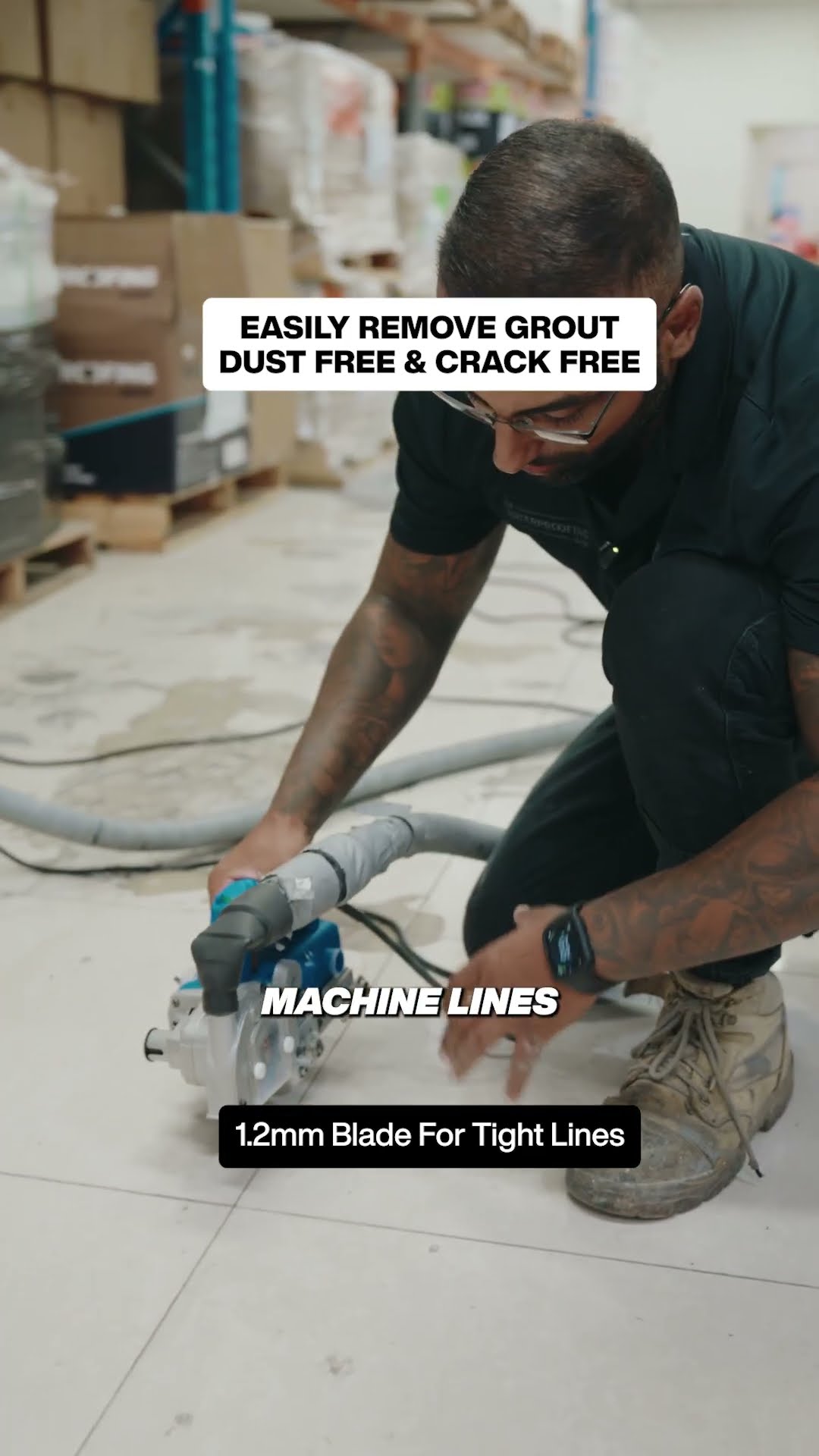
Watch it working
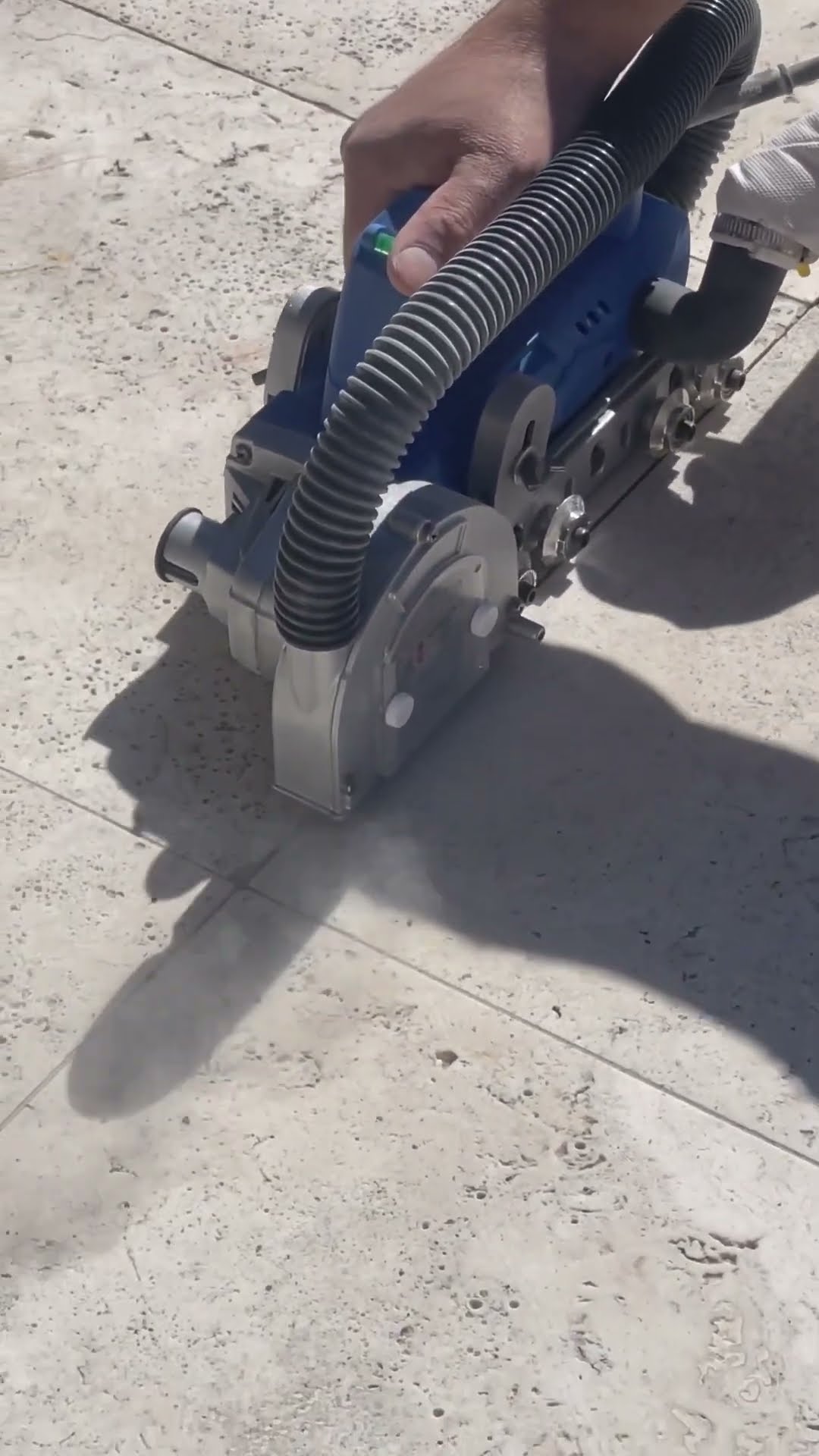
A quick look at the machine, then a full joint cleared start to finish.
 Overview
30 second overview
What the Grout Buster 3000 does and what comes in the box.
 Step by step
Full installation
The complete job filmed start to finish, no cuts.
Complete the setup
Add the blades and re-grout products that finish the job. Tick what you need and add them in one go.
What's included
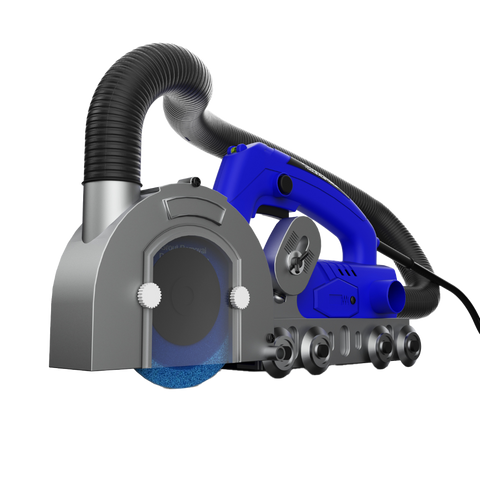
1200W corded grout removal machine with forward-and-backward blade motion.
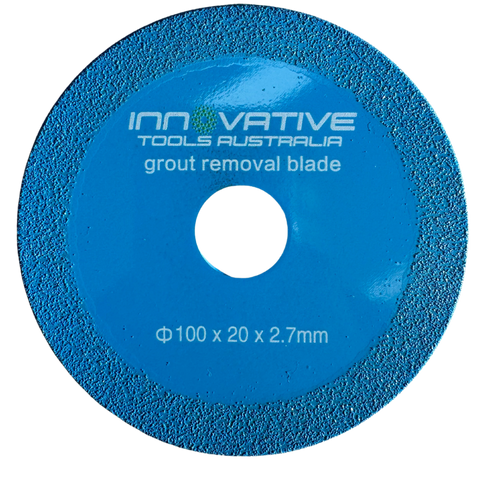
A diamond blade fitted ready to cut. Four thicknesses are available so you can match the joint.
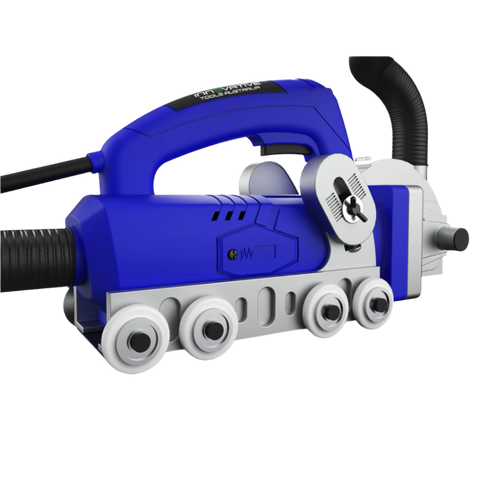
Hold the blade centred on the grout line so it tracks straight and stays off the glaze.
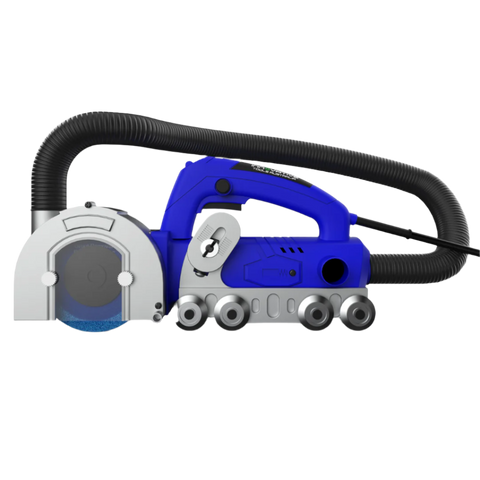
On-board extraction with a collection bag to capture debris at the cut.
Stop raking out grout joints by hand
Removing grout with a hand rake or a multi tool is slow, and one slip takes the edge off the tile. This machine tracks the joint and clears it at an even depth.
Why it was built
Grout removal has always been the worst part of a regrout. Hand raking takes hours across a bathroom floor, and a multi tool blade wanders straight into the tile edge.
Where hand removal goes wrong
Joints get cleared to different depths, so new grout cures at different rates and colours up unevenly. Chipped tile edges then have to be filled, and the repair is visible for good.
Why professionals use it
The joint is cleared at a set depth with the tile edges left intact, and the dust goes into a vacuum instead of through the house.
Grout Buster 3000 vs a multi-tool
How much time does it save?
Drag the sliders to match your work. See how much faster a guided powered pass is than raking grout out with a multi-tool.
Estimates only, based on your inputs. Actual time and savings vary by joint, grout, operator and conditions.
Where this tool gets used
Built for the wet areas and service spaces that have to stay dry.
-
Bathrooms
Showers, hobs and floor wastes in domestic and commercial bathrooms.
-
Balconies
Exposed decks and door thresholds where water has to drain away cleanly.
-
Plant rooms
Wet plant and pump rooms where a floor waste has to sit flush.
-
Lift pits
Pits that need a tanked floor and a drain that does not sit proud.
-
Basements
Below ground slabs where drainage and membrane detail have to line up.
-
Commercial kitchens
High traffic wet floors with multiple wastes and heavy cleaning.
-
Hospitals
Wards, theatres and wet rooms built to a tight finished floor level.
-
Apartments
Repeat bathroom layouts where every unit has to come out the same.
This machine takes out
Check it suits your joints
Two minutes here saves a return. The Grout Buster 3000 is built for straight grout lines on standard-to-wide joints - confirm your joint width and material before you buy.
Replace the blade, not the machine
When cutting slows or the blade starts running hot, swap it for a fresh diamond blade. Match the thickness to your joint - 1.2mm for fine joints through to 2.7mm for heavy-duty grout and epoxy.
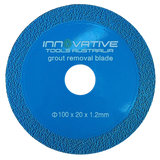
Built for straight-line grout removal
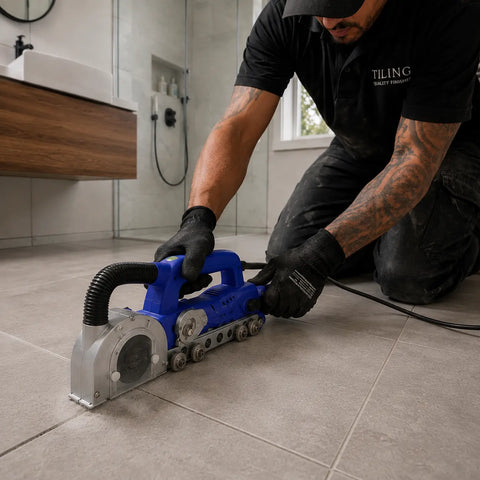
Rake out old cement grout from floor and wall joints before re-grouting.
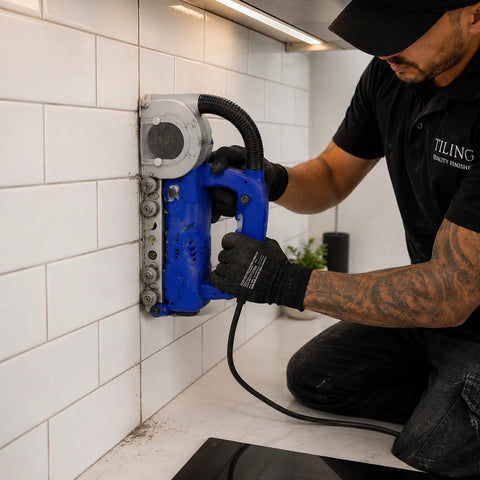
Clean, straight grout removal on splashback and floor joints.
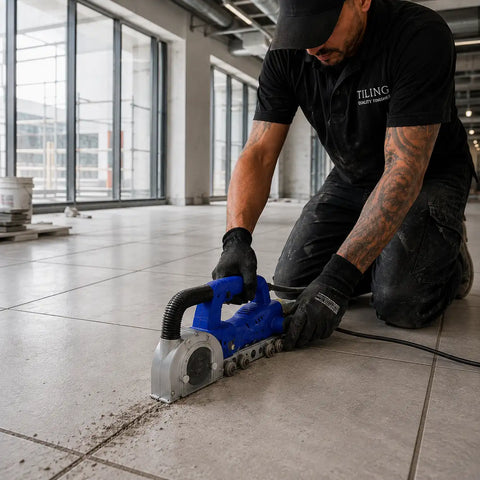
Long straight runs where the powered pass is fastest.
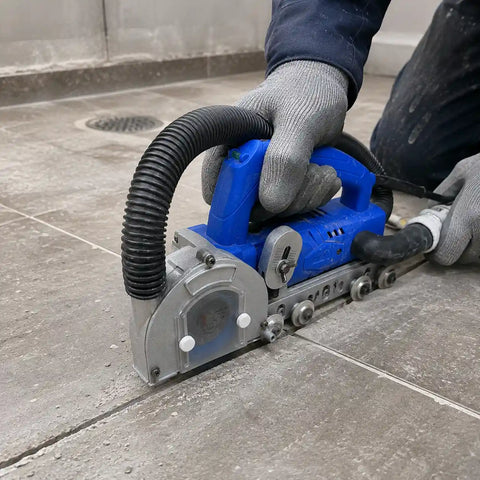
Rake out failed grout ahead of membrane repair.
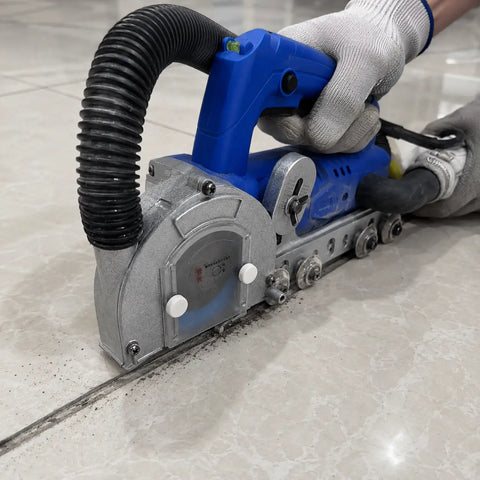
Work slower in short sections with a thicker heavy-duty blade.
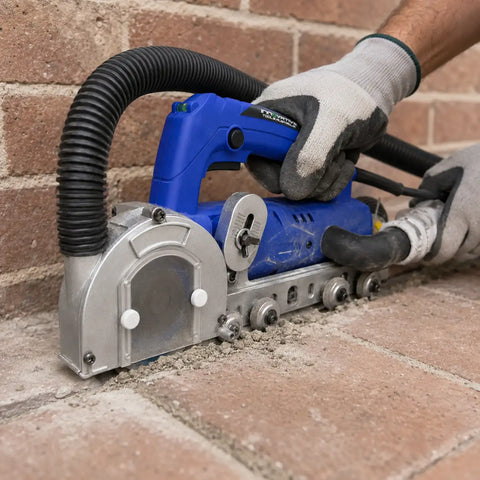
Strip grout, epoxy and loose concrete off brick and masonry.
Projects using this tool
Tap a project to see the products used, the process and the result.

Apartment build

Hospital upgrade

School refit

Commercial tower

Luxury home

Basement tanking
Frequently asked questions
-
Will it damage my tiles?
Not if the blade is narrower than the joint and the stainless guide wheels keep it centred on the grout. Work a shallow pass first and ease off near edges. Chips happen when the blade wanders onto the glaze - the guide wheels are designed to stop exactly that.
-
Can it remove epoxy grout?
Yes, but epoxy is much harder than cement - go slower, work in short sections to avoid heat build-up, and use a thicker heavy-duty blade (the 2.7mm).
-
Does it handle cement grout?
Yes - that's its ideal material, sanded or unsanded. It gives the fastest removal and the longest blade life on cementitious grout.
-
How deep does it cut?
Up to 13.5mm maximum. Rake to at least around 3mm - deeper for crumbling or mouldy grout - so the new grout keys into a firm base.
-
How does it control dust?
It has an integrated vacuum and a dust collection bag that capture debris at the cut. For silica compliance, still wear a P2 respirator, pair it with a suitable dust extractor where required, and follow your site's WHS requirements.
-
How long does the blade last?
Diamond blades outlast carbide many times over on grout. Replace the blade when cutting slows or heat and vibration rise. Replacement diamond blades are available separately.
-
Can I use it on both walls and floors?
Yes - both. Floors and long straight runs are where it's fastest.
-
What joint widths does it suit?
It's best on standard-to-wide joints (roughly 2-6mm+). It's too wide for hairline or mosaic joints under about 1.5mm - use hand tools there.
-
Can it follow curves or get into corners?
Straight lines, yes. Tight curves, mosaics and internal corners are better finished by hand with a grout pick - a straight blade can't reach cleanly.
-
Can I remove silicone with it?
No. Silicone in corners and change-of-plane joints isn't grout - remove it with a knife or silicone remover, never a grout blade.
Learn how to use this tool
Hands on training at our Sydney centre.
 PREFLEX 3000 Installer Training - 1 Day Hands-On Course
 All Things Waterproofing: Your Guide to Compliant Waterproofing Using FORSPEC and the Latest Construction Codes
 ACTFLEX 5000 Installer Training - Self-Adhesive Sheet Waterproofing
 FORSPEC Injection Systems - Crack Repair & Leak Sealing Training
The standards behind wet area work
AS 3740 and the NCC set out how wet areas are prepared and waterproofed in Australia. Here is what they ask for in plain English, as background for planning the job.
The Australian Standard that sets out which surfaces in a bathroom, ensuite or laundry are waterproofed, how far the membrane carries up walls and how falls and drainage are handled.
The Code sets the performance requirements wet area construction has to meet, and calls up AS 3740 as a way of showing those requirements are satisfied.
Not sure it suits your joints?
Call the team before ordering and we'll confirm it suits your joint width, tile and grout. Specialist waterproofing supplier - not a general hardware store.
Ready to regrout faster?
Need advice first? Call the team and talk it through.