




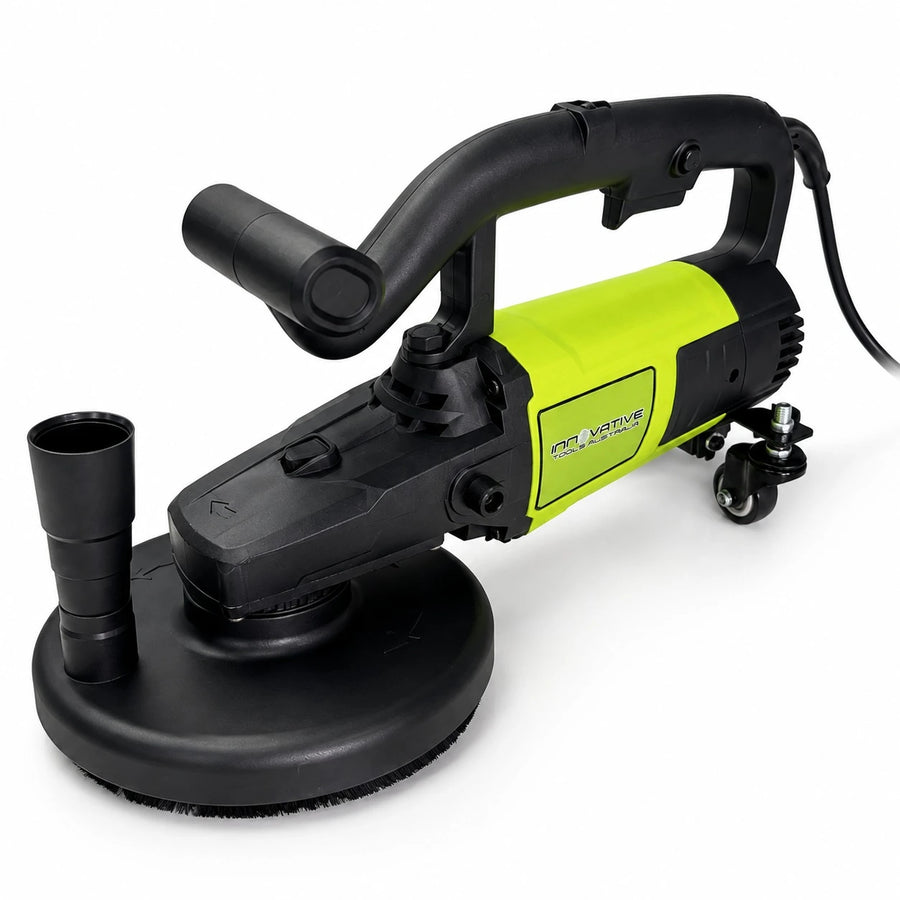
Innovative Tools Australia 180mm Concrete Floor Grinder 2200W
2200W floor grinder with a 180mm diamond head. Strips membrane, glue and coatings with the dust going to your extractor.
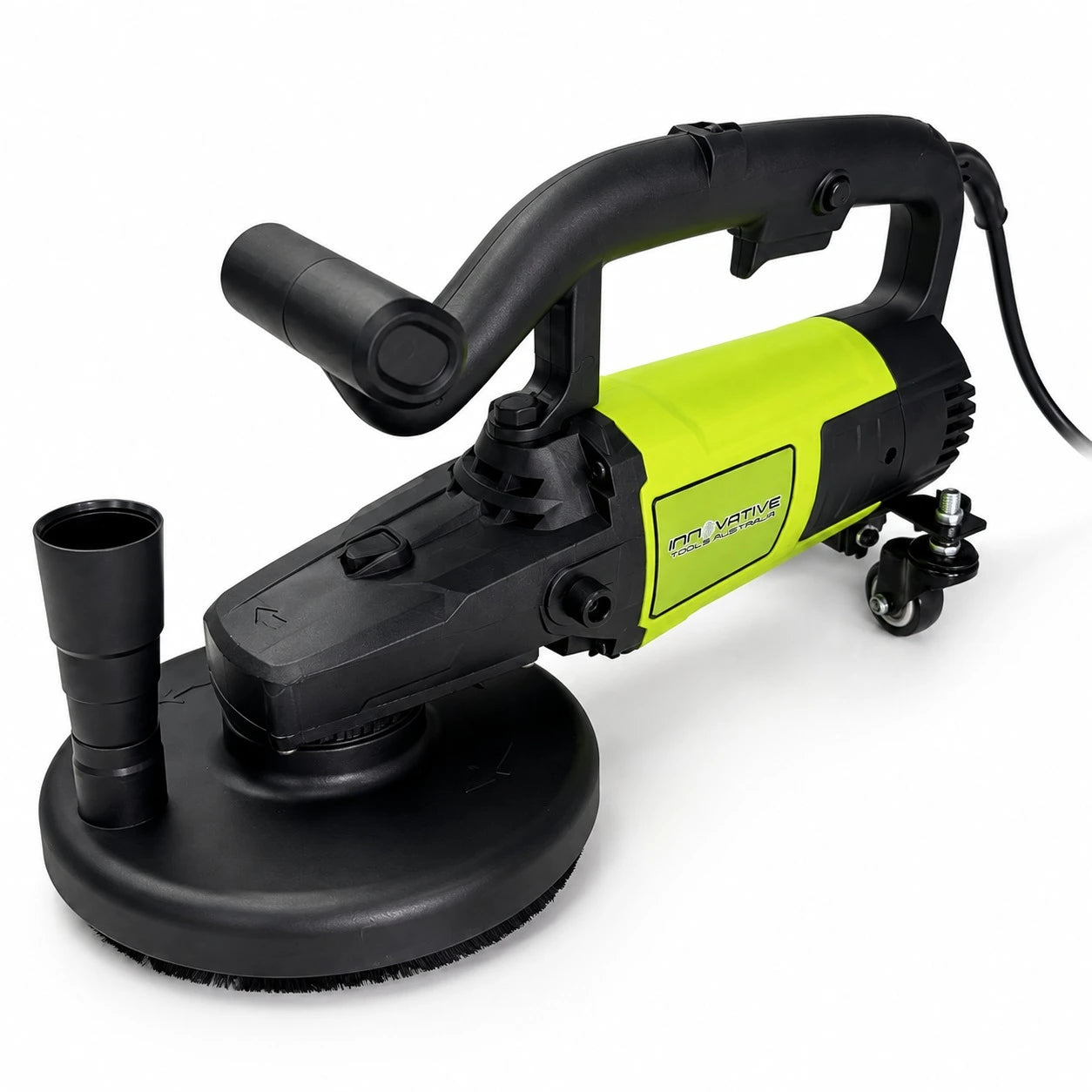
The Innovative Tools Australia 180mm Concrete Floor Grinder is a 2200W surface preparation machine for fast, controlled grinding of concrete and cement-based substrates. The 180mm diamond head sits in a dust shroud with a vacuum outlet, on an adjustable rolling wheel base with dual handles.
What it's for
- Prepping slabs before waterproofing or flooring
- Removing membranes, epoxy, paint, coatings, tile glue and laitance
- Grinding uneven concrete
Why waterproofers buy it
- 2200W motor for consistent torque under load
- Dust shroud with vacuum outlet for dust-controlled grinding
- Rolling wheel base and dual handles for control and less fatigue
- Robust housing built for the job site
Specs
180mm diamond grinding head, 2200W. Run it into an M-class extractor and wear a P2 respirator. Box contents, including whether a diamond disc is supplied, are being confirmed with the supplier, so call before ordering. Weight, speed and plug rating are not published.
or 4 interest-free payments of $162.50 with  · ex GST $590.91
Call (02) 8021 3517 before you order
Product Details
Technical Specifications
Product Files
No documentation available for this product.

Watch it working
A quick look at the machine, then a full pass over a slab ready for membrane.
 Overview
30 second overview
What the ITA 180mm Floor Grinder does and what comes in the box.
Complete the setup
The M-class extractor and PPE that make dust-controlled grinding safe. Tick what you need and add it in one go.
What's included
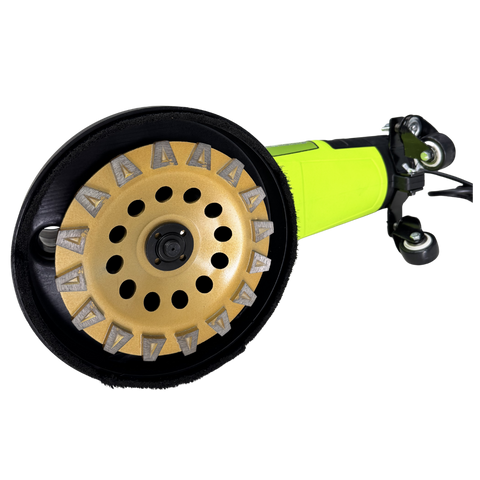
A 180mm (7") diamond grinding head that strips coatings, membranes, epoxy, tile glue and laitance.
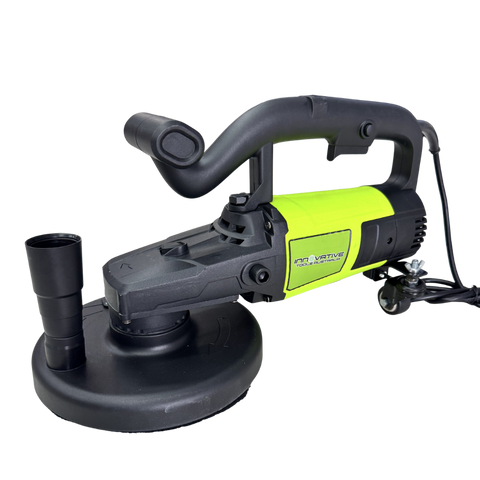
A dust shroud around the head with a vacuum outlet, ready to connect an extractor and capture dust at the source.
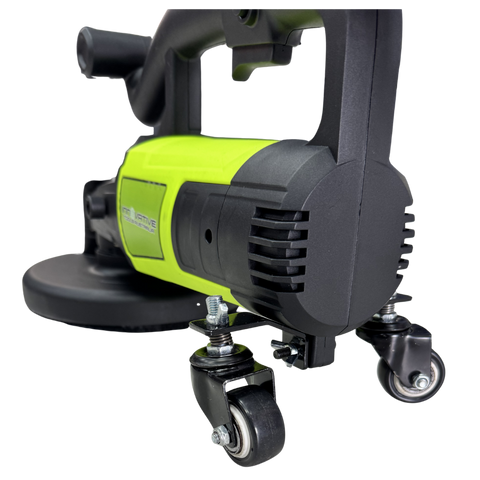
A wheeled base that carries the weight and glides across the slab for steady, even passes.
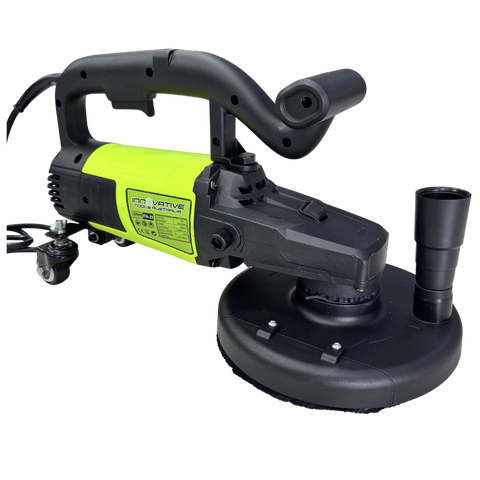
Two-handed control for a firm grip and less fatigue over a long session.
Stop preparing slabs with an angle grinder and a broom
Surface prep sets up everything that goes on top of it. A hand held grinder takes off high spots unevenly, throws dust across the site and leaves a slab the membrane never fully keys into.
Why it was built
Preparing a floor with a small hand grinder means working bent over, one narrow pass at a time, with dust going straight into the air on a site that is about to be sealed.
Where hand grinding goes wrong
Laitance and curing compound get missed, high spots get chased instead of levelled, and the grinder leaves swirl marks. Primer then sits on the residue rather than into the concrete.
Why professionals use it
A wider head, an even pass and a vacuum port. The slab comes up consistently keyed across the whole area, so primer and membrane go down on sound concrete.
The 180mm grinder vs a hand-held angle grinder
How much time does it save?
Drag the sliders to match your work. Enter the m2 you prep and how much faster this grinder is than grinding by hand.
A typical guide only, based on your inputs - not a published rate. Real time and savings vary with concrete hardness, coating, grit and site conditions.
Where this tool gets used
Built for the wet areas and service spaces that have to stay dry.
-
Bathrooms
Showers, hobs and floor wastes in domestic and commercial bathrooms.
-
Balconies
Exposed decks and door thresholds where water has to drain away cleanly.
-
Plant rooms
Wet plant and pump rooms where a floor waste has to sit flush.
-
Lift pits
Pits that need a tanked floor and a drain that does not sit proud.
-
Basements
Below ground slabs where drainage and membrane detail have to line up.
-
Commercial kitchens
High traffic wet floors with multiple wastes and heavy cleaning.
-
Hospitals
Wards, theatres and wet rooms built to a tight finished floor level.
-
Apartments
Repeat bathroom layouts where every unit has to come out the same.
This machine takes out
Check it suits your slab
Two minutes here saves a return. The 180mm grinder is built for dry surface prep on concrete - removing coatings, membranes, epoxy, tile glue and laitance. Confirm your surface and setup before you buy.
Replace the disc, not the machine
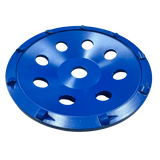
When cutting slows or the diamond wears down, swap the grinding disc for a fresh one and keep the machine. Match the segment to the job - aggressive for hard concrete and coatings, finer for laitance and blending.
Built for concrete surface prep
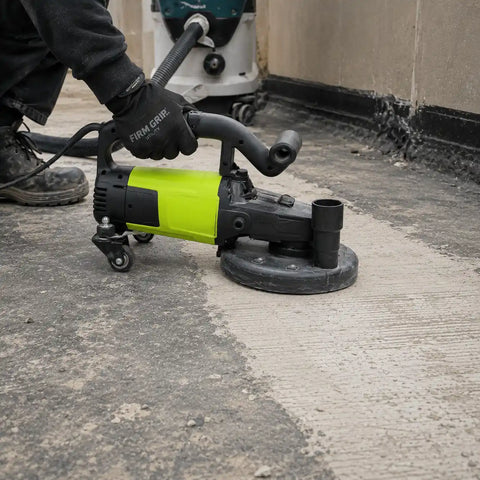
Grind bare slabs back to a clean, open profile so liquid or sheet membranes bond to sound concrete, not dust or weak paste.
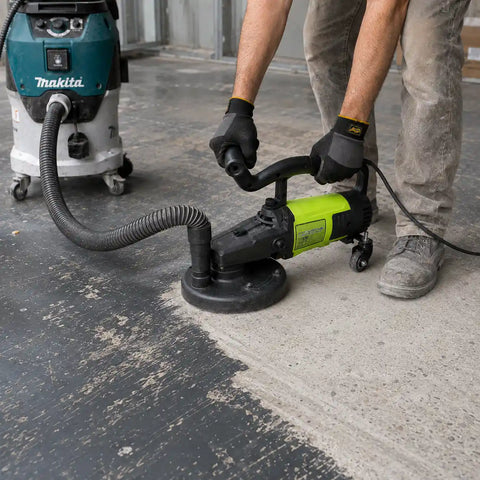
Take an old or failed system on a wet area, balcony or planter box back to substrate ready for a fresh application.
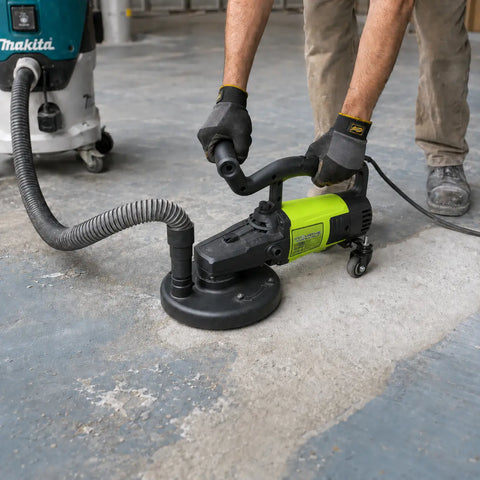
Take off cured epoxy, floor paint, sealers and old finishes ahead of recoating or a new floor build-up.
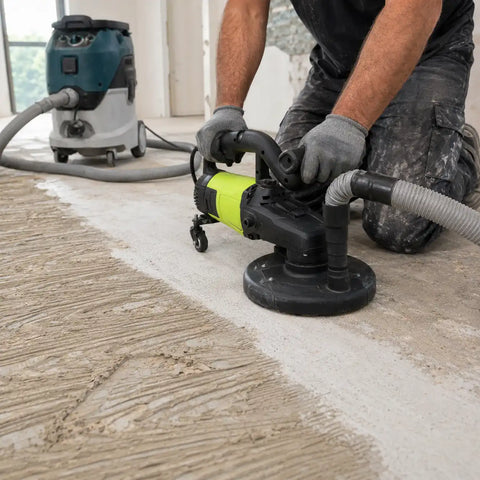
Grind down ridged tile adhesive, thinset and glue residue after a strip-out so the floor is flat and clean before re-tiling.
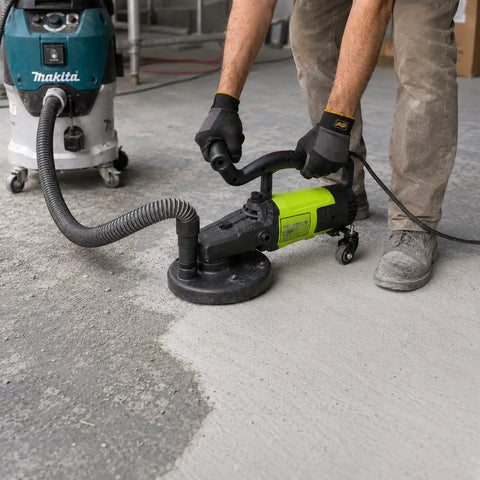
Cut through the weak cement laitance layer to expose stronger aggregate and give primers and membranes something solid to key into.
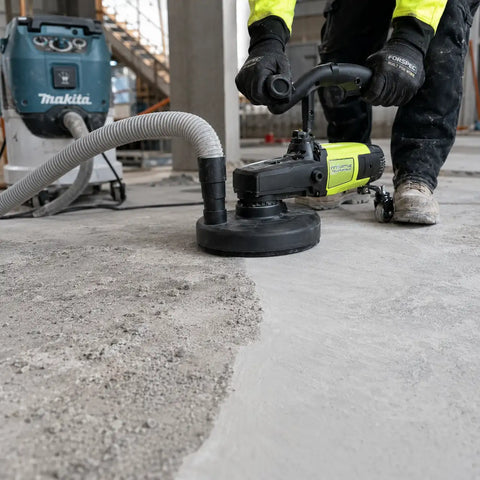
Bring the floor into tolerance and knock down high spots and trip lips before a floor covering goes down.
Projects using this tool
Tap a project to see the products used, the process and the result.

Apartment build

Hospital upgrade

School refit

Commercial tower

Luxury home

Basement tanking
Frequently asked questions
-
Which diamond disc does it take, and how do I change it?
It runs a 180mm diamond grinding head, so you match the disc to the job - a segmented cup wheel for general concrete, laitance and levelling, a turbo cup for a faster cut on hard slabs, or a PCD disc for peeling off thick coatings, epoxy and tile glue. To change it, unplug the tool, engage the spindle lock, undo the flange, swap the head and re-tighten. Always check the disc is rated to at least the tool's spindle speed.
-
Is this a wet or a dry grinder?
It is built for dry grinding. The integrated dust shroud with vacuum outlet captures dust at the head and pulls it into an extractor rather than flushing with water. Do not run water through it - it is a mains-powered tool and wet use is an electrocution risk.
-
What vacuum do I connect?
Connect it to a proper dust extractor via the shroud outlet, not a domestic shop vac. Concrete dust contains respirable crystalline silica, so an M-class extractor is the sensible minimum under Australian WHS silica rules, and H-class is better again. A cyclone pre-separator helps on big coating-removal jobs.
-
Will it actually remove epoxy, tile glue and old coatings?
Yes - surface prep and stripping is what it is for. It takes off coatings, waterproofing membranes, adhesives, paint, laitance, epoxy, tile glue and adhesive residues. Match the disc to the job - use a PCD disc for gummy build-ups like thick epoxy and tile adhesive so the material shears off cleanly instead of clogging a standard cup wheel.
-
What coverage can I expect per hour?
It depends on what you are removing and how hard you push. As a rough guide for a 180mm head, light work like laitance, paint or a thin coating might run around 20-30 m2/hr, while heavy going such as thick epoxy or tile glue drops to roughly 5-15 m2/hr. Bigger open floors are faster per square metre than tight, cut-up areas. Treat these as a guide only, not a published rate.
-
Will it run off a normal power point?
It is a corded 2200W mains-electric tool. We are confirming the exact plug and amperage rating with the supplier, so call us before ordering if you need that detail for your site. Run it on a heavy-duty extension lead kept as short as practical and pair it with an RCD.
-
Can it grind right into edges and corners?
It gets close but not perfectly flush. Like most shrouded single-head grinders, the disc sits slightly inboard of the housing, so it handles the bulk of the floor up to the skirting, then you finish the last strip along walls and into corners with a hand-held edge grinder or an angle grinder with a diamond cup.
-
How much dust does it make?
With a dust extractor connected it is close to dust-free at the head - that is the point of the integrated shroud, and it is what keeps you compliant with silica controls indoors. Run it without extraction and it throws a large cloud of fine concrete dust, both a silica health hazard and a mess, so always run it hooked up to a vac. There is no water option on this tool.
-
What warranty and parts backup does it come with?
It is an Innovative Tools (Australia) product, so it is backed by an Australian supplier for warranty, spares and support rather than a grey import with no backup. For replacement diamond discs and wear parts like the dust shroud, you order the matching head to suit the job. Call us to confirm the current warranty term.
-
How heavy is it and is it easy to move around?
It is designed to be manoeuvrable - the adjustable rolling wheel base carries the weight and lets you guide it smoothly across the slab instead of holding the full load, and the ergonomic dual-handle layout gives two-handed control and less fatigue over a long session. That makes it manageable for one operator on floor-prep work. Exact weight is being confirmed with the supplier, so call us if you need the figure.
Learn from the best in Australia!
Hands on training at our Sydney centre.
 PREFLEX 3000 Installer Training - 1 Day Hands-On Course
 All Things Waterproofing: Your Guide to Compliant Waterproofing Using FORSPEC and the Latest Construction Codes
 ACTFLEX 5000 Installer Training - Self-Adhesive Sheet Waterproofing
 FORSPEC Injection Systems - Crack Repair & Leak Sealing Training
The standards behind wet area work
AS 3740 and the NCC set out how wet areas are prepared and waterproofed in Australia. Here is what they ask for in plain English, as background for planning the job.
The Australian Standard that sets out which surfaces in a bathroom, ensuite or laundry are waterproofed, how far the membrane carries up walls and how falls and drainage are handled.
The Code sets the performance requirements wet area construction has to meet, and calls up AS 3740 as a way of showing those requirements are satisfied.
Not sure it suits your slab?
Call the team before ordering and we'll confirm it suits your surface, coating and the prep you need. Specialist waterproofing supplier - not a general hardware store.
Ready to prep faster?
Need advice first? Call the team and talk it through.