




Waterproofing failures are one of the most expensive defects in construction.
Most of them are avoidable.
The problem is not always the membrane — it’s the lack of proper testing before completion.
Flood testing is the only way to confirm whether a waterproofing system is performing correctly.
At the centre of that process is a simple but critical tool: the Flood Test Balloon.
WHAT IS A FLOOD TEST BALLOON
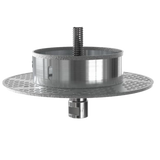
 A flood test balloon is a temporary inflatable plug used to block drainage outlets (typically 50mm–100mm pipes).
Once inserted and inflated, it creates a watertight seal inside the pipe, allowing the area above (shower, balcony, etc.) to be filled with water for testing.
Without this seal, flood testing cannot be performed properly.
WHAT IT DOES
- Seals off the drain
- Allows water to be retained in a defined area
- Enables visual monitoring of water level
- Identifies leaks before tiling or handover
It turns any wet area into a controlled test environment.
WHO USES FLOOD TEST BALLOONS
- Waterproofers
- Tilers
- Builders
- Plumbers
- Certifiers / inspectors
Anyone responsible for compliance or defect prevention should be using them.

WHY FLOOD TESTING IS CRITICAL
Flood testing verifies that:
- Membrane is continuous
- Junctions and corners are sealed
- Waste outlet connections are correct
- No pinholes or weak points exist
Without testing:
- Leaks show up after tiling
- Water tracks into adjoining rooms
- Rectification requires full demolition
Flood testing is the difference between:
a compliant job vs a future defect claim
HOW TO FLOOD TEST (CORRECT METHOD)

Step 1 – Install the Balloon
- Insert balloon into the drainage pipe (e.g. 100mm)
- Position it below the waste outlet
- Inflate until a tight seal is achieved
Step 2 – Fill with Water
- Fill the area (shower, bathroom, balcony) with water
- Typical depth: 20–40mm (depending on area)
Step 3 – Mark the Water Level
- Use a marker or tape
- Clearly mark the water line on the wall or tile
This is critical — it becomes your reference point.
Step 4 – Monitor Over Time
- Leave for 12–24 hours
- Inspect the marked level
Results:
- No drop → system is holding
- Drop in level → leak present
HOW TO FIND LEAKS USING DYE (ADVANCED METHOD)
For tiled or suspected leaking areas:
Step 1
- Add a visible dye (food dye or leak detection dye) to the water
Step 2
- Flood test as normal
Step 3
- Inspect surrounding areas:
- Below slab
- Adjacent rooms
- External walls
Result
- Dye will show exactly where water is escaping
This is one of the most effective methods for diagnosing leaking tiled bathrooms without full removal.
COMMON REASONS PEOPLE SKIP FLOOD TESTING
- Time pressure
- Lack of knowledge
- Assumption the membrane is “fine”
- Trying to save cost
These are the exact reasons failures occur.
Skipping a flood test can result in:
- Full bathroom demolition
- Waterproofing rework
- Legal disputes
- Warranty claims
REAL SITE FAILURES (COMMON ISSUES FOUND DURING TESTING)
- Poor bond around puddle flange
- Unsealed corners and junctions
- Membrane pinholes
- Incorrect falls causing water pooling
- Cracked screeds or movement joints
Flood testing exposes all of these before it’s too late.

WHY FLOOD TEST BALLOONS ARE ESSENTIAL
Without a proper drain seal:
- Water escapes immediately
- Test is invalid
- Results cannot be trusted
Flood test balloons ensure:
- Full containment
- Accurate testing
- Reliable results
They are not optional — they are mandatory for proper verification.
WHERE FLOOD TESTING SHOULD ALWAYS BE DONE

- Shower bases
- Bathrooms and laundries
- Balconies
- Podiums
- Rooftop wet areas
Any waterproofed area that retains water must be tested.
BEST PRACTICE
- Always test before tiling (if possible)
- Always mark water levels
- Always allow sufficient time (minimum 12–24 hrs)
- Always document results (photos help)
FINAL SUMMARY
Flood testing is not an extra step — it is a quality control requirement.
Flood Test Balloons make this process:
- Simple
- Fast
- Reliable
They allow you to confirm:
The system works before the job is signed off

